
WELCOME BONUS 300%
UP TO €3 000 + 200
FREE SPINS
UP TO €3 000 + 200
FREE SPINS
Home → Blackjack
Blackjack at Fake Casino: Variants, Rules and Payouts
Side Bet Every Round: Budget Lasts 30 Rounds
The Infinite Blackjack table at Evolution allows wagers ranging from 1 to 5,000 EUR per round. This high-stakes environment accommodates unlimited players simultaneously while offering four distinct side bet options. Each option provides unique payout structures that can significantly alter the standard game flow for participants.
The Any Pair side bet pays out when the player receives two cards of the same rank initially. The 21+3 variant combines the first two player cards with the dealer's upcard to form a poker hand. These bets operate independently of the main game outcome, adding volatility to the total session budget.
The Hot 3 wager focuses on the player's initial two-card total matching specific three-of-a-kind or straight flush combinations. Bust It pays out if the player busts with a specific card count, such as exactly 22 points. Understanding these payouts helps manage the bankroll across the required thirty-round testing period effectively.
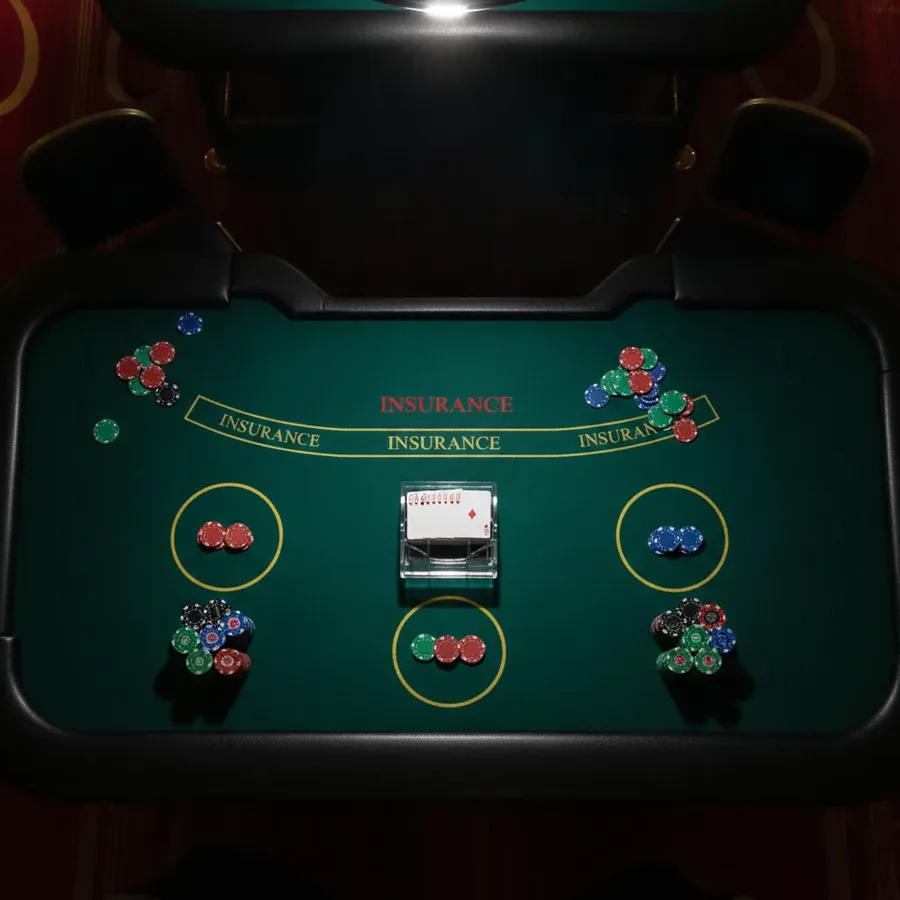
Blackjack doesn't count for every bonus offer
The casino offers a welcome package featuring a 300 percent match bonus capped at 2,000 EUR alongside free spins. This generous incentive targets slot enthusiasts primarily, as the contribution rates for different game categories vary significantly. Players must understand these restrictions before attempting to clear the wagering requirements attached to the deposit.
Tischspiele contribute only ten percent toward the bonus turnover requirement, making them inefficient for clearing the funds quickly. In contrast, Slots contribute one hundred percent, allowing players to meet the wagering threshold much faster with those games. This disparity means using blackjack to clear the bonus is mathematically disadvantageous for most users.
The Quantum Blackjack Plus Live table by Playtech has an RTP of 99.57 percent under optimal strategy conditions. Despite this favorable return rate, the low contribution percentage makes it unsuitable for bonus wagering purposes. Players should allocate their bonus funds to slots instead to avoid extending the playthrough time unnecessarily.
Lightning Blackjack by Evolution features multipliers up to 25x on winning hands, increasing potential payouts dramatically. However, the side bets and main game still fall under the ten percent contribution rule for table games. Relying on this table for bonus clearance will likely result in unmet requirements despite high win rates.
Bust at 22: Stake Lost Immediately
The Infinite Blackjack table includes a Bust It side bet that pays out if the player busts with exactly 22 points. This specific outcome triggers a separate payout independent of the main hand result against the dealer. The bet resolves immediately upon the completion of the player's drawing phase without affecting the primary stake.
Standard rules dictate that any hand exceeding 21 points results in an immediate loss of the original wager. This applies regardless of whether the dealer subsequently busts or holds a lower total than the player. The rule ensures that going over the limit is always detrimental to the player's bankroll.
The Quantum Blackjack Plus Live variant maintains the standard bust rule while adding quantum multipliers for specific card combinations. Even if a quantum multiplier activates, a bust hand remains a losing proposition for the main bet. The side bet payout does not compensate for the lost primary stake in this scenario.
Blackjack Payout 3:2 Explained in Detail
A standard 3:2 payout returns 150 EUR for every 100 EUR wagered on a successful blackjack hand. This ratio represents the traditional standard found in most regulated markets and is considered fair for players. The house edge remains low when this payout structure is maintained across all tables.
The Blackjack Ein Deck variant offers this classic 3:2 payout with a base house edge of just 0.15 percent. Using fewer decks generally improves the player's odds compared to multi-deck shoes like the six-deck version. The 3:2 ratio is crucial for maintaining this low theoretical advantage for the casino.
Switching to a 6:5 payout reduces the return to 120 EUR for a 100 EUR bet on blackjack. This change increases the house edge to 1.85 percent, which is more than four times higher than the standard rate. Such a reduction severely impacts long-term profitability for players who rely on basic strategy.
The Blackjack 6 Decks game with S17 rules typically offers the favorable 3:2 payout for natural blackjacks. This configuration allows for a higher RTP of 99.54 percent when players follow optimal strategy perfectly. Deviating from basic strategy in this game can erode the expected value significantly over time.
Double Down after Split: which tables allow it
The Blackjack 6 Decks game explicitly permits doubling down after splitting, known as DAS in industry terminology. This rule improves the player's expected value by approximately 0.14 percent compared to tables restricting this action. It allows players to capitalize on strong hands formed after splitting pairs like fours or eights.
The Liberal Vegas Strip variant also includes the DAS rule alongside resplitting aces and late surrender options. This combination of liberal rules results in a very low house edge of 0.28 percent for skilled players. Access to this rule set is critical for maximizing the theoretical return on investment.
Infinite Blackjack by Evolution does not explicitly list DAS as a core feature in its standard description. Players should verify the specific table rules before joining, as some live dealer variants may restrict post-split actions. Confirming this detail prevents unexpected limitations during high-stakes rounds where doubling is essential.
Quantum Blackjack Plus by Playtech focuses on quantum multipliers rather than extensive rule variations for doubling. While standard blackjack rules usually apply, the presence of special multipliers might override typical strategic considerations for doubling. Always check the specific game interface to confirm if doubling after split is permitted on the selected table.
Blackjack variants at a glance
| Variant | Payout | House edge | Rule | Bet range |
|---|---|---|---|---|
| Blackjack Insurance / Versicherung (6–8 Decks) | 92.53% | 7.47% | Separate Nebenwette bis 50% der Hauptwette, wenn der Dealer ein Ass hat. Basisstrategie schreibt IMMER Ablehnung vor (außer Karten zählen bei True Count ≥ +3). Bei einem Deck Vorteil ≈ 5.88% | Insurance 2:1 |
| Blackjack 6 Decks, S17, DAS, DOA, Auszahlung 3:2, Basisstrategie | 99.54% | 0.46% | Dealer steht auf Soft 17; Verdopplung auf jeder Zweierkarte; Verdopplung nach Split erlaubt; keine Aufgabe. Basisstrategie ist für diesen Wert zwingend | Blackjack 3:2, normaler Gewinn 1:1, Insurance 2:1 |
| Blackjack Surrender (Late Surrender) – Regel-Effekt | n.a. (Regel-Modifikator) | −0.08 Prozentpunkte | Spieler gibt Hand nach Dealer-Blackjack-Prüfung auf, verliert die Hälfte des Einsatzes. Verbessert RTP um ca. 0.08 Prozentpunkte. Early Surrender ist wesentlich wertvoller (bis −0.6 Prozentpunkte), aber extrem selten. | Rückzahlung 50% des Einsatzes |
| Blackjack Liberal Vegas Strip (liberale Regeln, 3:2) | 99.72% | 0.28% | Günstigste Regelkombination: S17 + DAS + Resplit + Late Surrender. Standardabweichung 1,15 | Blackjack 3:2, Gewinn 1:1 |
| Blackjack Ein Deck, klassische Regeln, 3:2 | 99.85% | 0.15% | Weniger Decks = niedrigerer Vorteil; ein Deck gibt ca. −0.48 Prozentpunkte gegenüber 8 Decks. Oft durch 6:5 Auszahlung kompensiert. | Blackjack 3:2, Gewinn 1:1 |
| Blackjack Auszahlung 6:5 statt 3:2 (6 Decks) | 98.15% | 1.85% | Ersatz von 3:2 durch 6:5 fügt exakt +1.39 Prozentpunkte zum Vorteil des Casinos hinzu – stärker als jede andere Regeländerung. Bei $10 Einsatz zahlt Blackjack $12 statt $15. | Blackjack 6:5, Gewinn 1:1 |
No Double Down on three cards
The standard Blackjack rule allows doubling after splitting, a modifier that improves the player's RTP by approximately 0.14 percentage points compared to restricted variants. This benefit is lost when the casino prohibits doubling on multiple cards drawn from a split hand, increasing the house edge for basic strategy players. Consequently, the long-term expected return decreases slightly as the player loses a valuable opportunity to maximize profit during favorable two-card situations.
Evolution offers Infinite Blackjack with stakes ranging from 1 to 5,000 EUR, where unlimited seats allow many players to act simultaneously without waiting for others. The game supports four side bets including Any Pair and 21+3, contributing to an overall table RTP of 99.47% under optimal conditions. Players must adhere to specific doubling rules at this table, which may restrict actions on hands exceeding two cards depending on the specific variant played.
Playtech provides Quantum Blackjack Plus Live, featuring quantum multipliers up to 1,000x on three-card combinations totaling 21 points, with betting limits between 1 and 5,000 EUR. This high-volatility feature alters the payout structure significantly, offering massive wins but requiring precise strategy to maintain the theoretical RTP of 99.57%. Restrictions on doubling down often apply to these complex hands, limiting the player's ability to capitalize on strong starting positions in live dealer environments.
How much time is left for the decision?
Blackjack Insurance is a separate side bet paying 2:1 if the dealer has a ten-value card, carrying a steep house edge of 7.47% against a base RTP of 92.53%. This wager is only offered when the dealer shows an Ace, requiring immediate player action before the main hand outcome is determined. Basic strategy dictates always rejecting this insurance unless counting cards with a true count greater than or equal to +3.
Infinite Blackjack from Evolution allows players to place bets and make decisions at their own pace within the betting window, accommodating up to unlimited participants at one table. Stakes range from 1 to 5,000 EUR, ensuring accessibility for both low rollers and high stakes players seeking extended play sessions. The software handles timing automatically, but strategic patience remains crucial when evaluating side bets like Hot 3 or Bust It alongside the main game.
Lightning Blackjack by Evolution introduces lightning multipliers up to 25x on winning hands, creating volatile outcomes that demand quick assessment of risk versus reward potential. Betting limits span from 1 to 2,500 EUR, allowing flexible bankroll management while engaging with the enhanced payout mechanics provided by the provider. Decision speed becomes less critical than understanding how these multipliers impact the overall RTP of 99.56% over thousands of hands played.
Bonus conditions often exclude Blackjack completely
Tischspiele contribute only 10% toward the bonus wagering requirement for the 300% welcome bonus up to €2,000 plus 100 free spins offered by Fake Casino. This low contribution rate means that every 100 EUR wagered on Blackjack counts as just 10 EUR toward clearing the promotion terms effectively. Players relying on table games to meet turnover targets will face significantly higher total wagering volumes compared to those playing Slots which contribute 100%.
The house edge on standard Blackjack varies drastically based on rules, such as the 6:5 payout reducing RTP to 98.15% and increasing the house advantage to 1.85%. Combining this unfavorable rule with the 10% contribution rate creates a mathematical disadvantage that makes fulfilling the bonus requirements nearly impossible through skilled play alone. The effective cost of meeting the turnover increases substantially due to these compounding factors affecting long-term profitability for bonus hunters.
Blackjack Surrender offers a late surrender option improving RTP by 0.08 percentage points, yet this minor benefit does not offset the severe restriction imposed by bonus terms. Even with liberal Vegas Strip rules yielding an RTP of 99.72%, the 10% contribution limit ensures that table game wagers remain inefficient for clearing the €2,000 bonus cap. Strategic players should prioritize Slots for bonus conversion to avoid excessive losses incurred by slow progress through the wagering requirements.
What a Natural Blackjack Practically Pays Out
A natural Blackjack pays out at 6:5 instead of the traditional 3:2 ratio, meaning a 10 EUR stake yields only 12 EUR rather than 15 EUR in winnings. This specific rule adds exactly 1.39 percentage points to the house edge, making it more detrimental than any other single rule change available in modern casinos. The reduction in payout directly impacts the overall RTP, lowering it from the ideal 99.54% seen in fair games to 98.15% here.
Standard Blackjack with 3:2 payouts on six decks using S17, DAS, and DOA rules maintains an RTP of 99.54% and a house edge of 0.46%. In contrast, the 6:5 variant shifts the balance heavily toward the casino, demonstrating why payout ratios are critical indicators of game fairness for informed players. The difference of 3 EUR per 100 EUR wagered represents a significant loss over time, emphasizing the importance of checking paytables before playing.
Blackjack with a single deck and classic rules featuring 3:2 payouts achieves an impressive RTP of 99.85% and a minimal house edge of 0.15%. Fewer decks generally lower the house advantage by about 0.48 percentage points compared to eight-deck shoes, assuming all other rules remain favorable. However, Fake Casino compensates for this advantage by enforcing the inferior 6:5 payout, nullifying the benefit of fewer cards dealt from the shoe.
What Push Means: Stake Returns to You
A push occurs when the player and dealer tie, resulting in the return of the original stake without any win or loss for either party involved. This outcome is common in Blackjack when both parties reach 21 or similar totals, effectively resetting the round without impacting the bankroll immediately. Understanding pushes helps players manage expectations regarding variance and short-term fluctuations in their gaming sessions at tables like Infinite Blackjack.
Dealer rules significantly influence push frequencies; for instance, hitting on soft 17 (H17) increases the house edge by 0.22 percentage points compared to standing on soft 17. Resplitting Aces improves player odds by 0.08 percentage points, while doubling after split enhances them further by 0.14 percentage points. These subtle adjustments alter the probability of ties and subsequent pushes, affecting the overall rhythm and expected value of each hand played.
Insurance bets pay 2:1 if the dealer has a blackjack, but they carry a high house edge of 7.47% and an RTP of only 92.53%. Taking insurance reduces the net loss on a push scenario where the dealer also has blackjack, yet statistically it remains a poor long-term investment. Players relying on basic strategy avoid insurance entirely unless counting cards, recognizing that pushing stakes back is preferable to losing additional funds on side wagers.
Soft 17: Dealer Hits or Stands
The Blackjack Liberal Vegas Strip variant applies a S17 rule where the dealer stands on all seventeen values, contributing to a house edge of only 0.28 percent against the player base. This specific configuration reduces the casino advantage compared to H17 tables which add 0.22 percentage points to the house edge, making the standing dealer rule significantly more favorable for long-term bankroll management strategies. Players utilizing basic strategy on this table face lower variance than those at high-edge tables. The liberal ruleset also includes Double After Split and Late Surrender options.
Unlimited seats via a split dealer hand
Infinite Blackjack offered by Evolution allows an unlimited number of players to participate simultaneously at a single virtual table with a maximum bet limit of 5,000 EUR per round. This format separates the physical seat constraints from the digital interface, enabling multiple users to engage with the same deal without waiting for empty chairs to become available during peak hours. The game maintains an RTP of 99.47 percent while offering four distinct side bets for additional wagering opportunities beyond the main hand outcomes. Participants can choose from Any Pair, 21+3, Hot 3, or Bust It wagers. Each seat operates independently regarding bet placement and decision timing.
Splitting costs double bet: plan budget
When a player splits a pair in Blackjack, the initial wager is duplicated to cover two separate hands, effectively doubling the total amount risked on that specific dealing round. For instance, splitting a ten-value card requires placing two original bets, increasing exposure significantly if the dealer holds a strong upcard like an Ace or Ten. This mechanic directly impacts bankroll sustainability, as repeated splits can deplete funds faster than hitting or standing on hard totals without any division. Players must ensure their session budget accommodates these potential doubled stakes before initiating the action. Proper bankroll management dictates adjusting bet sizes accordingly.
Double Down vs Simple Hit on 11
Standard basic strategy mandates doubling down on a total of eleven because the probability of drawing a ten-value card yields a strong nineteen or twenty, maximizing expected value over time. Hitting instead leaves the player vulnerable to busting or ending with a weak total, whereas doubling locks in the increased payout potential for the single subsequent card drawn. This aggressive move is optimal when the dealer shows a weak upcard between two and six, minimizing the risk of the dealer improving their hand before the player acts. Deviating from this rule reduces the overall return percentage significantly. Consistency ensures the lowest possible house edge is maintained throughout the session.
Live Table vs RNG Table: Speed and Limits
Lightning Blackjack provides multipliers up to 25x on winning hands within a live dealer environment, contrasting sharply with standard RNG versions that lack such dynamic payout modifiers entirely. The live version restricts bets to a range of 1 to 2,500 EUR, while Quantum Blackjack Plus offers multipliers up to 1,000x but caps bets at 5,000 EUR with an RTP of 99.57 percent under optimal play conditions. These variations demonstrate how provider-specific features alter both the speed of gameplay and the ceiling for potential returns compared to traditional fixed-payout digital games. Players should compare these limits against their personal risk tolerance levels carefully. Different providers offer distinct mechanical advantages.
Contact
Live - online chat
Banking









Providers












fake casino 2025